If you are drawn to places where architecture, interiors, and daily life all feel carefully layered, Hudson tends to stand out fast. For many buyers and weekend visitors, the appeal is not just one beautiful house or one good shop. It is the rare mix of preserved streetscapes, independent design retail, and a walkable cultural core that makes the city feel distinct. If you are exploring Hudson with a design-minded eye, this guide will help you understand what gives it that reputation and what to look for as you browse. Let’s dive in.
Why Hudson Stands Out
Hudson has an unusual level of architectural continuity for a small city. The Hudson Historic District includes 756 contributing features, with significant buildings dating from 1783 to 1935. In practical terms, that means you can still see commercial, public, industrial, and residential history living side by side in one compact grid.
That preserved mix shapes the experience of being there. Instead of a downtown that feels rebuilt or overly polished, Hudson still shows its original structure. You notice it in the block pattern, the storefront rhythm, and the way homes and businesses remain closely tied to the street.
Warren Street is the clearest example. The National Register survey describes its nine-block length as Hudson’s primary architectural resource and one of the most intact nineteenth-century urban streetscapes in the Hudson Valley. Buildings sit right at the sidewalk edge, creating a strong sense of enclosure that makes browsing feel natural and immersive.
Warren Street for Design Browsing
For design lovers, Warren Street is not just a main street. It is the city’s visual spine and a practical way to understand Hudson’s character in one walk. Storefronts, upper-floor residences, period details, and changing retail displays all work together to create a streetscape that feels both historic and current.
Hudson is also known for its independent business base. Visit Hudson notes that the city has more than 200 independent establishments and very few national chains. That matters if you value places shaped by individual taste rather than uniform branding.
The antiques trade played a major role in Hudson’s downtown revival, and that influence is still visible. More than 50 antiques dealers now operate on Warren Street and in waterfront warehouses, giving the city a long-running reputation for decorative arts, furniture, and collected objects.
If you want the densest concentration of galleries and home-focused retail, the 500s and 600s of Warren Street are especially important. Current walking-guide materials also point to South 3rd Street and Columbia Street as strong clusters for antiques, furniture, textiles, galleries, and home goods.
Galleries and Shops to Explore
Hudson’s gallery scene is broad enough to support repeat visits. Columbia County Tourism and Visit Hudson list spaces such as 510 Warren Street Gallery, Carrie Haddad Gallery, Front Room Gallery, FRG Objects & Design/Art, Hudson Milliner Art Salon, Lightforms Art Center, Limner Gallery, and Peter Jung Fine Art.
That range gives the city more than a simple weekend-shopping identity. You are not just passing display windows. You are moving through an active arts environment that helps explain why Hudson attracts buyers who care about visual culture, collecting, and interiors.
The home-and-design retail side is just as notable. Visit Hudson’s directory includes businesses such as Hudson Home, Gestalt New York, Upstate Rug Supply, Valley Variety, and Stair Galleries, alongside other furniture, lighting, object, and interior-design businesses.
Taken together, these shops create a useful real-world lens for homebuyers. As you browse, you can get a feel for the local design vocabulary, from traditional pieces to industrial accents to layered contemporary interiors. That can make it easier to picture how a Hudson property might live and evolve over time.
Home Styles Hudson Buyers Notice
Many buyers come to Hudson already picturing a certain kind of house. Often, they are imagining a brick or frame home with historic proportions, tall windows, and a strong street presence. The city supports that image, but it also offers more variety than first-time visitors expect.
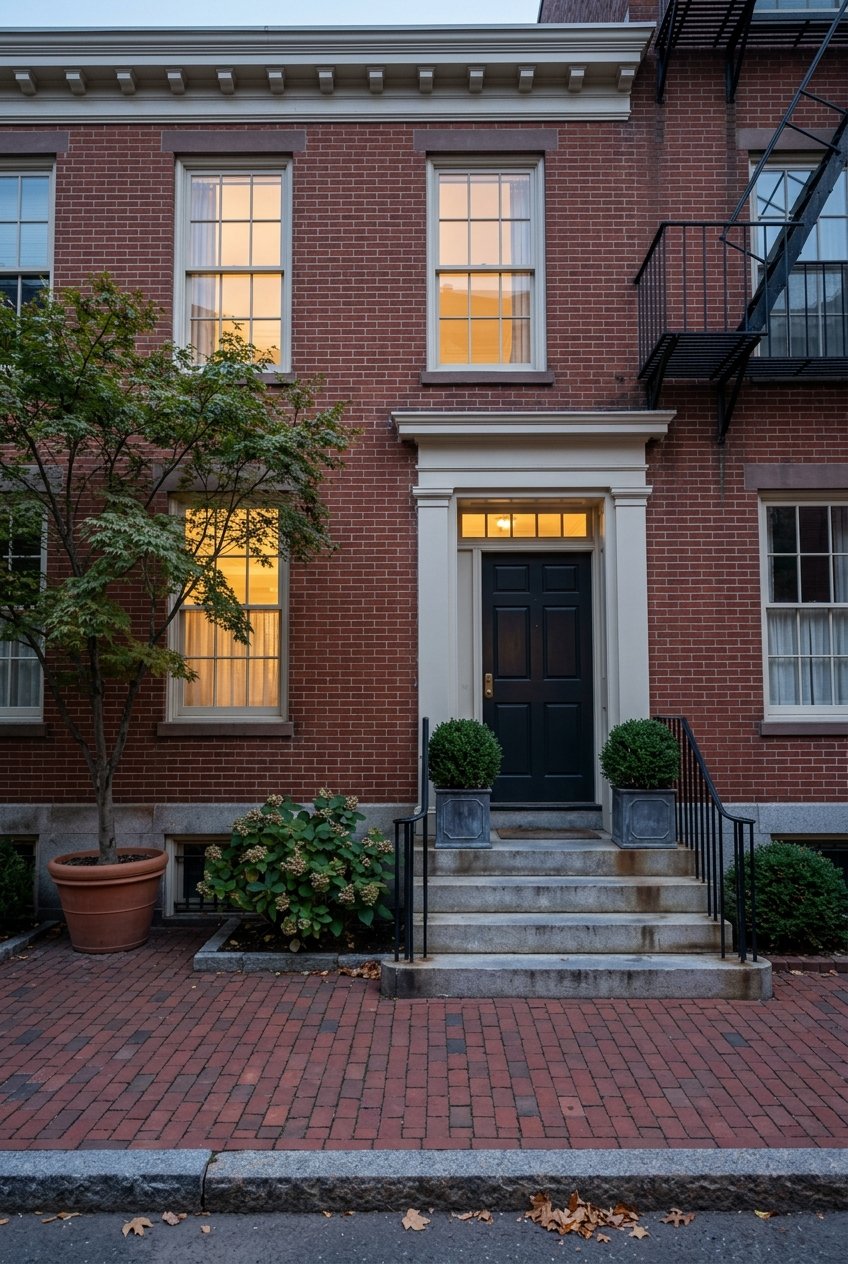
Hudson’s earliest houses are especially strong in the Federal style. Lower Warren and Union Streets include notable five-bay, two-story brick and frame houses, helping define the elegant, restrained look that many people associate with the city’s oldest residential fabric.
As the city developed through the mid-nineteenth century, Union and Allen Streets added late Greek Revival, Italian Villa, Picturesque, and Gothic Revival homes. These streets, especially around Courthouse Square and Washington Square, broaden the architectural story beyond the earliest core.
Later prestige streets such as Willard Place added another layer, with Second Empire, Queen Anne, and Colonial Revival houses. These homes often appeal to buyers who want more ornamental detail, more visual variety, or a slightly different relationship between house and lot.
East of the main grid, the Rossman Avenue Historic District expands the range again. Early-twentieth-century Queen Anne, English Revival, and Bungalow houses show that Hudson is not one-note. If you are trying to balance historic character with a somewhat later residential feel, this area may be worth close attention.
Visit Hudson also highlights North Sixth Street’s sea-captain houses and nautical details. That river-linked history is part of what gives Hudson’s residential identity its depth. The city’s appeal is tied not only to storefronts and shopping, but also to maritime and mercantile roots that still show up in the built environment.
Hudson’s Industrial-Creative Layer
One reason Hudson feels current rather than frozen in time is its visible industrial layer. Historic commercial and waterfront structures remain part of the city’s identity, which adds contrast to the finer-grained residential streets and formal rowhouse blocks.
Basilica Hudson is a good example of that contrast. Visit Hudson describes it as an arts center housed in a restored nineteenth-century waterfront factory. Spaces like this help explain why Hudson can feel both refined and experimental at the same time.
Hudson Hall adds another important cultural anchor. Its mission states that the landmarked building contains New York State’s oldest surviving theater and supports visual arts, performing arts, and educational programming year-round. For buyers considering a second home, that kind of steady cultural presence can be just as meaningful as the retail scene.
What This Means for Buyers
If you are in the early stages of a Hudson home search, design appeal should be paired with practical context. The city has a formal historic-preservation system, and that can shape what ownership looks like in a meaningful way.
Hudson’s city code requires a certificate of appropriateness for exterior alterations, additions, restoration, demolition, new construction, and other visible changes to properties in historic districts or on landmarks. New construction must also be compatible with the district. In a place where street presence matters, exterior decisions carry added importance.
Interior changes are generally outside the commission’s review unless the interior itself is specifically landmarked. For many buyers, that creates a useful distinction. You may have flexibility inside while still needing to think carefully about facades, windows, materials, and other outward-facing elements.
This is one reason Hudson often appeals to buyers who value stewardship as much as style. Owning here is not only about finding a pretty house. It is also about understanding how your property fits into a larger architectural setting.
A Design-Centered Weekend Rhythm
Hudson also supports the kind of repeat-visit lifestyle that many second-home buyers want. According to the current walking guide, recurring events include the Hudson Farmers’ Market, Waterfront Wednesdays, Hudson Jazz Festival, Open Studio Hudson, Hudson Halloween, and Winter Walk.
Those events give the city an ongoing rhythm beyond shopping hours. If you are considering whether Hudson can hold your interest over time, that matters. A place with regular cultural and community programming often feels easier to return to in different seasons.
For design lovers, that seasonal rhythm adds another layer to the appeal. You can spend a morning looking at architecture, an afternoon in galleries and antiques shops, and an evening at a performance or public event. Few small cities package those experiences so tightly within a walkable historic core.
Why Hudson Resonates So Strongly
At its best, Hudson offers a rare overlap of preserved architecture, dense independent retail, and an active preservation culture. That combination helps explain why the city attracts everyone from casual browsers to serious second-home buyers looking for a place with visual identity and lasting character.
If you are weighing Hudson as a buying destination, it helps to look beyond surface charm. Pay attention to the streetscape, the variety of house types, the gallery ecosystem, and the preservation framework that keeps the city’s character intact. Together, those features are what make Hudson feel less like a trend and more like a place with enduring design substance.
For buyers seeking thoughtful guidance in Hudson and across the surrounding market, the right advice should balance aesthetics, stewardship, and long-term fit. To begin a private conversation, connect with Hudson Valley Team at Compass.
FAQs
What makes Hudson, NY appealing to design lovers?
- Hudson combines a preserved historic grid, a highly intact Warren Street streetscape, more than 200 independent establishments, active galleries, antiques dealers, and concentrated home-design retail.
What home styles can you find in Hudson, NY?
- Hudson includes Federal, Greek Revival, Italian Villa, Picturesque, Gothic Revival, Second Empire, Queen Anne, Colonial Revival, English Revival, and Bungalow homes across different parts of the city.
Where are the main galleries and design shops in Hudson, NY?
- Many of the most walkable concentrations are on the 500s and 600s of Warren Street, along with nearby stretches of South 3rd Street and Columbia Street.
What should buyers know about historic rules in Hudson, NY?
- In historic districts or on landmarks, exterior alterations and other visible changes generally require a certificate of appropriateness under Hudson’s city code, while interior changes are generally outside review unless the interior is specifically landmarked.
Is Hudson, NY a good fit for second-home buyers?
- Hudson offers a compact historic core, year-round cultural programming, galleries, antiques, and design retail, which can make it especially appealing for buyers seeking a repeat-visit lifestyle with strong visual character.